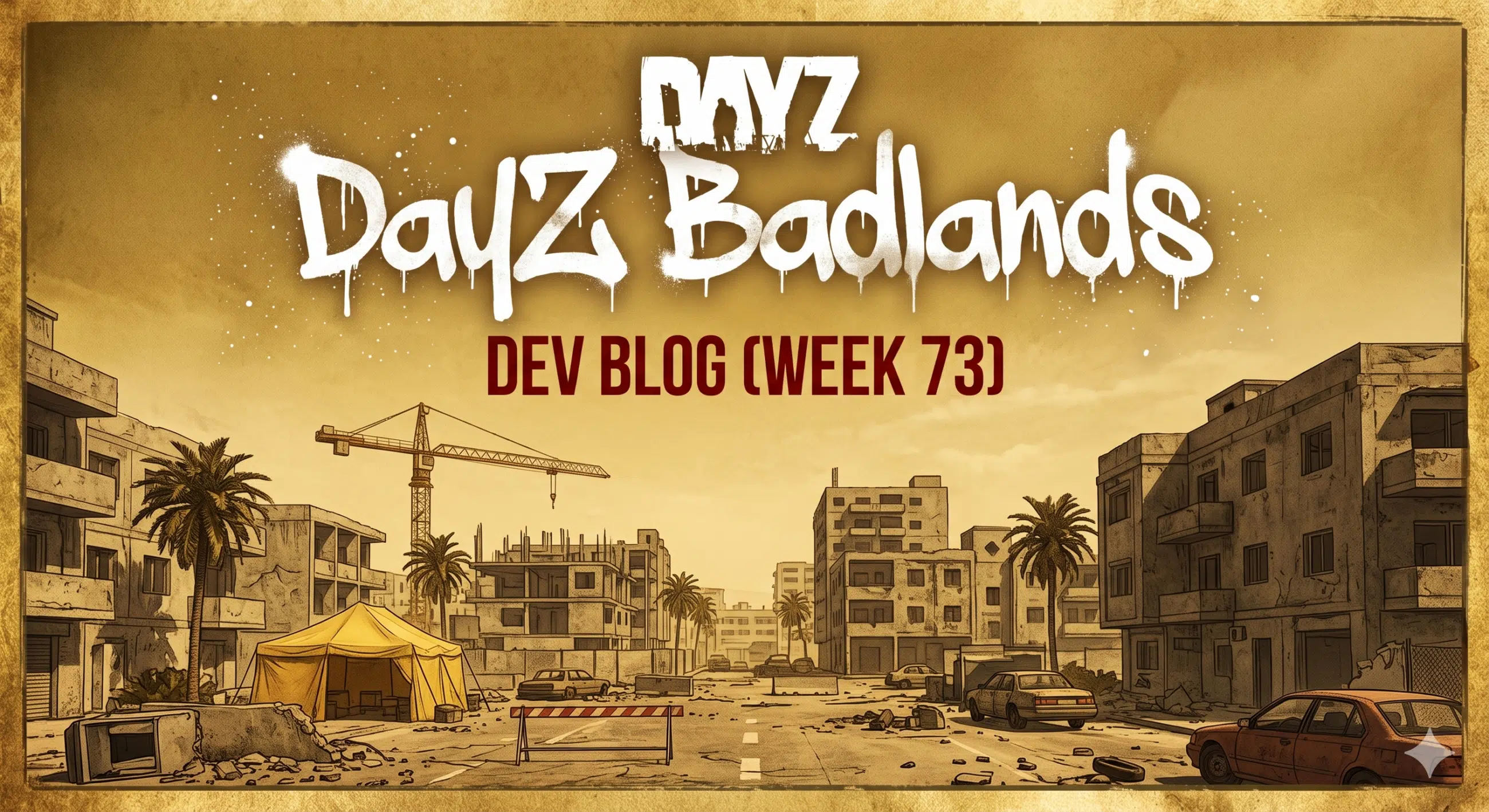
Bohemia Interactive has just released DayZ Badlands Dev Blog Week 73, offering survival enthusiasts an in-depth look at the development of the highly anticipated 2026 expansion. This week, the spotlight falls squarely on the Environment Team as they break down two crucial pillars of the upcoming 267 km² desert map: the tactical prospects of PvP combat in Nasdara and the meticulous 3D asset creation process that brings this war-torn province to life.
As the largest official map in DayZ history, Nasdara shifts away from the lush, dense forests of Chernarus and Livonia, plunging players into a sun-scorched wasteland. Here is everything you need to know about how Bohemia is tuning the environment for hardcore firefights and visual authenticity.
Nasdara’s Environment: A New Era for DayZ PvP
In DayZ, the environment dictates how players fight, move, and survive. According to the developers in Dev Blog Week 73, transitioning to an arid, Middle Eastern-inspired landscape presented unique layout challenges. Without thick treelines to hide behind, how does a survivor move without becoming immediate sniper bait?
The Environment team revealed that Nasdara’s topography is specifically sculpted with dynamic PvP sightlines in mind:
- Natural Micro-Cover: The desert is far from flat. Shifting sand dunes, dried riverbeds (wadis), and jagged rock formations have been strategically placed to provide cover during flanking maneuvers.
- Urban Verticality: The dense, Middle Eastern-style cities offer intricate close-quarters combat (CQB). Multi-story structures, rooftops, and narrow alleyways create a claustrophobic, high-stakes environment where sound cues and vertical awareness are key.
- Chokepoints and Rotations: Flanked by border mountains to the west and encroaching sands to the east, navigating the terrain forces tactical decision-making. Contesting resource-rich areas like modern oil fields and crumbling Soviet-era military bases will require careful planning and coordination.
Under the Hood: The Asset Creation Process
The second half of the dev blog highlights the immense detail going into Nasdara’s unique look. To make the world feel lived-in and scarred by a history of proxy wars before the infected outbreak, the art team is crafting bespoke assets from scratch.
Bohemia Interactive detailed their current asset pipeline, emphasizing a commitment to realism:
- Photogrammetry and High-Poly Modeling: Using advanced texturing techniques, the team is ensuring that concrete structures, abandoned historical sites, and military infrastructure showcase realistic wear and tear, rust, and sunbleached degradation.
- Optimization for Performance: Despite the increased visual fidelity and large scale of the 267 km² map, the dev team is optimizing Level of Detail (LOD) models to ensure stable frame rates during intense multiplayer engagements.
- Environmental Storytelling: Every asset tells a story. Bullet-ridden walls, shattered infrastructure, and abandoned military checkpoints are designed to convey the lore of a geopolitically troubled territory that was ravaged long before the survival struggle began.
Why This Matters for the Road to Badlands
Following the recent 1.29 update stream—which introduced military convoys, heat management mechanics, and the return of the motorcycle—Dev Blog Week 73 proves that Bohemia Interactive is focusing deeply on core gameplay loops. Survival in DayZ Badlands won’t just be about managing your thirst during a brutal drought; it will be about mastering a brand-new style of open-world warfare where the environment itself can be your greatest ally or your executioner.
DayZ Badlands is scheduled to launch in 2026 for PC (Steam), PlayStation, and Xbox. Stay tuned for further developer updates as the road to Nasdara continues.
Reading Between the Lines: What the Artwork Reveals About DayZ Badlands Arsenal
While Bohemia Interactive’s written log remains tightly focused on environment blocks and polygon maps, the official promotional art accompanying Dev Blog Week 73 speaks volumes about the shifting meta of DayZ’s weaponry. Art in game development is rarely accidental, and the inclusion of specific firearms hints heavily at what survivors will scavenge in Nasdara.
The cover art features a striking, deliberate contrast in military tiers that tells the story of Nasdara’s proxy wars:
- The Modern Tier (SCAR Assault Rifle): Carried prominently by the front survivor, the inclusion of a western modern rifle like the SCAR signals that high-tier, late-conflict military equipment will likely be tied to the map’s high-value infrastructure, such as active oil fields or UN-style intervention crash sites.
- The Surplus Insurgency Tier (Lanchester Mk I / Vintage SMG): In the background, the second survivor grips an unmistakable piece of history—a vintage submachine gun modified with a massive drum magazine. Mirroring historical battlefield adaptations (such as British Lanchester submachine guns or Soviet PPSh configurations modified in regional conflicts), this weapon suggests a heavy reliance on historical surplus stock.
This subtle asset reveal emphasizes that players will have to bridge a massive technological gap, moving from unreliable, heavy drum-fed vintage firearms found in old town ruins to modern tactical rifles hidden deep within militarized zones.
Read full dev blog here: DayZ Badlands Dev Blog Week 73
Frequently Asked Questions
DEV BLOG
What is DayZ Badlands?
DayZ Badlands is an upcoming major expansion for DayZ, releasing in 2026. It introduces a massive 267 km² desert terrain called Nasdara, featuring arid spring climates, unique infected variants, region-specific weapons, and complex infrastructure scarred by proxy wars.
What did Dev Blog Week 73 focus on?
Dev Blog Week 73 focused on the Environment team’s approach to balancing PvP combat lanes across Nasdara’s arid topography and provided a detailed behind-the-scenes look at their 3D asset creation pipeline.
Is DayZ Badlands the biggest map?
Yes, at 267 km², Nasdara (the map for DayZ Badlands) is the largest official terrain ever created for DayZ, surpassing Chernarus (230 km²) and Livonia (168 km²).
About the Author: Malo Renaud